
DEFINITION: Autonomous and human-led penetration testing, defined
Autonomous penetration testing is security testing performed by software that probes systems, identifies potential weaknesses, and reports findings without a human directing each individual action. It operates continuously, covers large surfaces quickly, and applies consistent logic across every asset it examines.
Human-led penetration testing is security testing directed by a qualified tester who applies judgment, contextual understanding, and creative problem-solving to a target system. The tester forms hypotheses about how a system might be misused, tests those hypotheses, and interprets results against an understanding of what the application is actually meant to do.
The distinction that matters is not speed or cost. It is that machine-driven testing identifies deviations from known patterns, while human-led testing identifies violations of intended behaviour. Those are different problems, and they surface different vulnerability classes.
Where machine-driven testing genuinely performs well
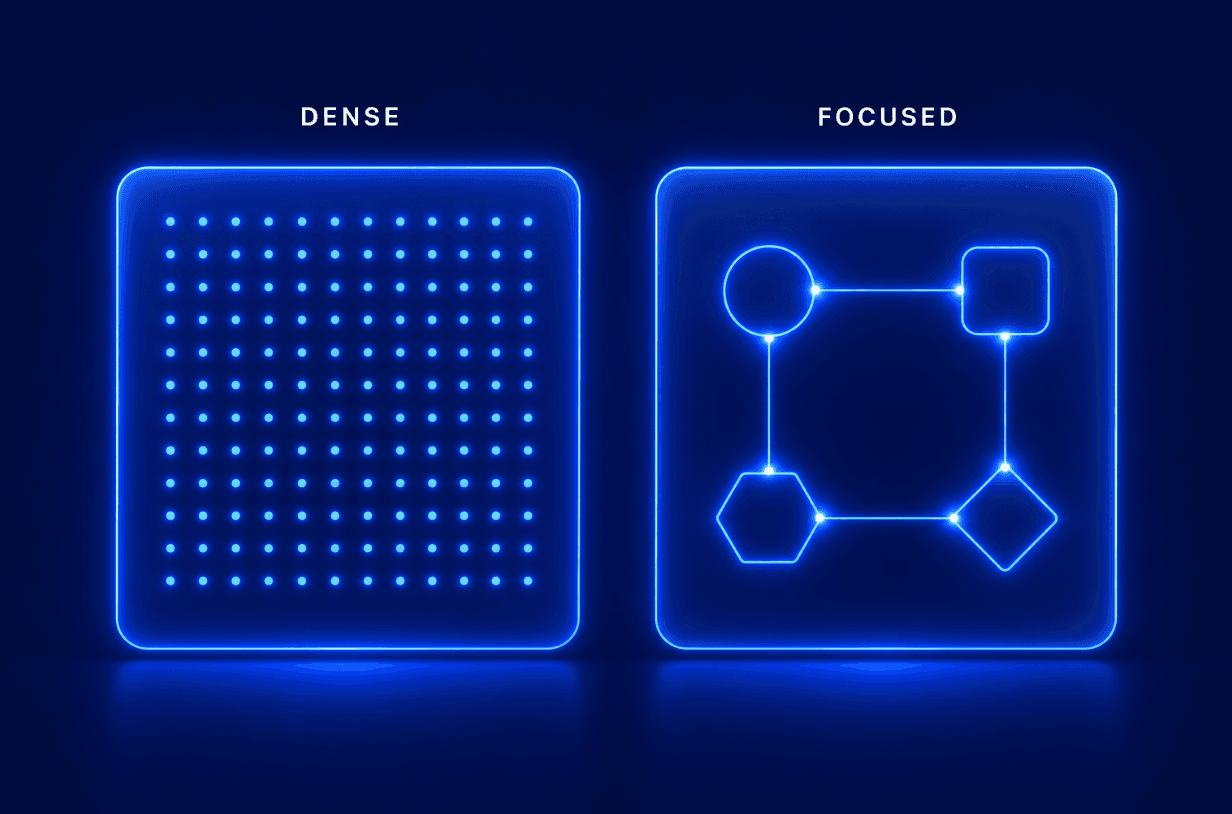
There are specific categories where software-driven testing outperforms a human tester on every practical measure, and pretending otherwise would be dishonest.
- Coverage at scale: Software can examine thousands of endpoints, parameters, and configurations in the time a human tester examines a handful. For a large surface, this breadth is not achievable manually within any reasonable budget.
- Known vulnerability identification: Publicly documented vulnerability classes with recognisable signatures, outdated library versions with published advisories, and misconfigurations with well-defined correct states are all reliably detected by software.
- Consistency and repeatability: Software applies identical logic on every run. A human tester's attention varies across a long engagement. For regression checking, machine consistency is a genuine advantage.
- Continuous operation: Software runs constantly at negligible marginal cost. This makes it well suited to catching newly introduced known-pattern issues shortly after they appear in production.
- Speed of first-pass triage: Software narrows a large surface down to a smaller set of areas worth a human tester's attention, which makes the human hours that follow considerably more productive.
Where machine-driven testing consistently falls short

The limitations are as specific as the strengths, and they cluster around one theme: software does not understand what an application is for.
- Business logic flaws: A checkout process that allows a discount to be applied twice, a workflow that permits an approval step to be skipped, or a refund process that can be triggered without a corresponding purchase are all functioning exactly as coded. Nothing is technically broken. Software has no basis for flagging them because it does not know what the business rules are supposed to be.
- Authorization and access control gaps: Software can confirm an endpoint requires authentication. It cannot reliably determine whether the authenticated user should have access to that specific record, because that requires understanding the intended permission model rather than the implemented one.
- Chained exploitation: Real attacks frequently combine several low-severity issues into one high-severity outcome. An information disclosure that reveals a username format, combined with a weak lockout policy, combined with a predictable identifier, can produce account takeover. Software reports three low-severity findings. A human tester recognises the chain.
- Contextual severity assessment: Software assigns severity by category. A human tester assigns severity by consequence, understanding that the same technical flaw is critical on a payments endpoint and negligible on a marketing page.
- False positive burden: Software-generated findings require human validation before an engineering team can act on them. Unvalidated output consumes engineering time on issues that turn out not to be exploitable, which is a real and frequently underestimated cost.
Your Last Pentest Is Already Out of Date
Every week you ship without continuous testing is a week a vulnerability goes unseen. See what Capture The Bug finds in your first engagement.
Book a demo
The practical question is not which approach is better in the abstract but which combination fits a specific product's risk profile and scope. Book a demo with Capture The Bug and see how machine-driven coverage and CREST-certified human testing are combined against a real application.
The honest verdict: this is not a competition
The framing of autonomous vs manual penetration testing as a contest produces the wrong answer, because the two approaches address different vulnerability classes and neither substitutes for the other.
Machine-driven testing without human validation produces volume without confirmation. An engineering team receives a long list of potential issues with no reliable indication of which are genuinely exploitable, and spends its time triaging rather than fixing.
Human-led testing without machine-driven support is constrained by hours. A tester working manually across a large surface must prioritise, and areas that receive less attention may contain issues that broad coverage would have surfaced quickly.
The combination is what works in practice. Software provides breadth, continuity, and rapid identification of known-pattern issues. Human testers provide validation, contextual judgment, chained-exploitation analysis, and detection of the logic and authorization flaws that cause the most serious real-world breaches. A penetration testing service built on this combination delivers confirmed, prioritised findings rather than unvalidated output.
What this means for evaluating a provider

Four questions separate providers who genuinely combine both approaches from those who use the language without the substance.
- Are findings validated by a human before delivery? This is the single most important question. Unvalidated output transfers the triage burden to the customer's engineering team.
- Are the testers certified? CREST accreditation confirms that testers have passed independent practical assessment. This is verifiable through the CREST member directory.
- Does the methodology explicitly cover business logic and authorization testing? These are the categories software cannot address, so they must be named in the scope rather than assumed.
- Is severity assessed contextually? A provider that assigns severity by category rather than by consequence for the specific application is applying machine logic without human interpretation.
Capture The Bug's penetration testing service is structured around all four, with CREST-certified testers validating every finding before it reaches a customer's team.
What this means for your roadmap
The vulnerability classes that cause the most serious breaches—business logic flaws, broken access control, and chained exploitation—are precisely the classes machine-driven testing cannot reliably detect. This is not a criticism of the software. It is a description of what pattern-matching can and cannot do.
The correct approach is to use machine-driven coverage for breadth and continuity, and CREST-certified human testers for validation, context, and the flaw categories that require understanding intent. A penetration testing service structured this way treats software as the first pass and human judgment as the deciding one. Any provider claiming software alone is sufficient is either misunderstanding the limitation or choosing not to mention it.
Plan Your Annual Pentesting Strategy the Right Way
Learn how modern SaaS companies structure pentesting across the year to reduce risk, stay compliant, and avoid last-minute panic before audits.

FAQ
Can AI replace human penetration testers?
No. Machine-driven testing reliably identifies known vulnerability patterns and covers large surfaces quickly, but it cannot detect business logic flaws, evaluate whether an authenticated user should have access to specific data, or chain multiple low-severity issues into a realistic attack path. These require human judgment and contextual understanding of what an application is intended to do.
What is the difference between autonomous and manual penetration testing?
Autonomous testing is performed by software probing systems without a human directing each action, and it excels at scale, speed, and consistency. Manual or human-led testing is directed by a qualified tester applying judgment and creative problem-solving, and it excels at business logic flaws, authorization gaps, and chained exploitation.
Which vulnerability types does software-driven testing miss most often?
Business logic flaws, broken access control between users, chained exploitation combining several low-severity issues, and contextual severity misjudgement. These share a common cause: software identifies deviations from known patterns but cannot evaluate whether behaviour violates intended business rules.
Why do software-generated findings need human validation?
Software produces findings based on pattern recognition, which generates false positives. Without human validation confirming exploitability, engineering teams spend time investigating issues that are not genuinely exploitable, transferring the triage cost from the provider to the customer.
How should a company evaluate a provider claiming to combine both approaches?
Ask whether every finding is validated by a human before delivery, whether testers hold verifiable CREST accreditation, whether the methodology explicitly covers business logic and authorization testing, and whether severity is assessed contextually for the specific application rather than assigned by category.