How to Read and Act on a Penetration Testing Report (A Guide for CTOs and CISOs)
Every organisation that commissions a penetration test eventually receives a report. It arrives as a dense PDF, often running anywhere from thirty to one hundred and fifty pages, filled with technical findings, severity ratings, vulnerability identifiers, and remediation recommendations.
For some CTOs and CISOs, that report becomes the centrepiece of a structured remediation programme. For others, it gets filed, referenced briefly in the next board meeting, and quietly forgotten until the next annual test is due.
The difference between those two outcomes is not the quality of the test. It is whether the people receiving the report know how to read it, interpret it in the context of their specific business, and translate it into a sequence of decisions that actually improve security.
Capture The Bug has delivered penetration testing reports to hundreds of organisations across Australia, New Zealand, and the United States. The most common gap observed is not a lack of findings. It is a lack of clarity on what to do with them. This guide is for the CTOs and CISOs who want to close that gap.
Understand What the Report is Actually Telling You
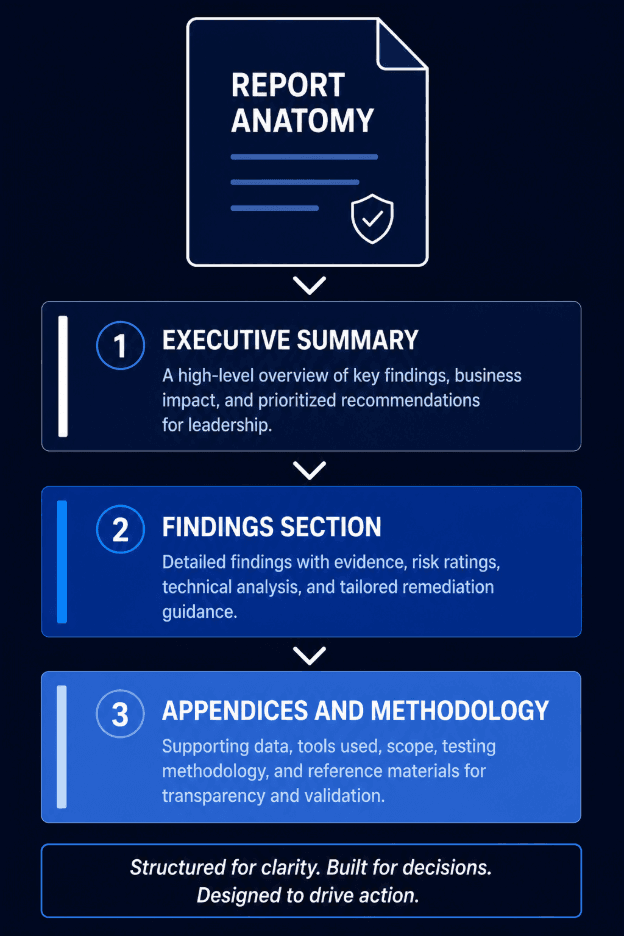
Before diving into individual findings, it helps to understand the three distinct layers every well-structured penetration testing report should contain.
The first layer is the **executive summary**. This section is written for business leadership, not engineers. It describes what was tested, what the overall risk posture looks like, and what the most significant findings mean in plain language. If a CTO or CISO can read the executive summary and walk away understanding the top three risks to the business, the report is doing its job at this layer.
The second layer is the **findings section**. This is the technical core of the report. Each finding describes a specific vulnerability or weakness that was identified and successfully exploited or demonstrated during the test. A well-written finding includes the vulnerability description, the evidence showing it was verified, the risk rating, and a recommended remediation approach.
The third layer is the **appendices and methodology documentation**. This covers how the test was conducted, what tools and techniques were used, and any limitations on the scope that might affect how findings are interpreted. This layer matters more than most clients realise because it tells the reader what the test did not cover, which is just as important as what it did.
How Severity Ratings Actually Work
The severity rating on each finding is the number most people focus on, and it is also the number most frequently misunderstood.
Penetration testing reports typically use a four or five tier severity scale. Critical and high findings represent vulnerabilities that could be exploited to cause significant damage with relatively low effort. Medium findings represent weaknesses that require more specific conditions to exploit or that carry a lower potential impact. Low and informational findings document issues that are worth addressing but carry minimal immediate risk.
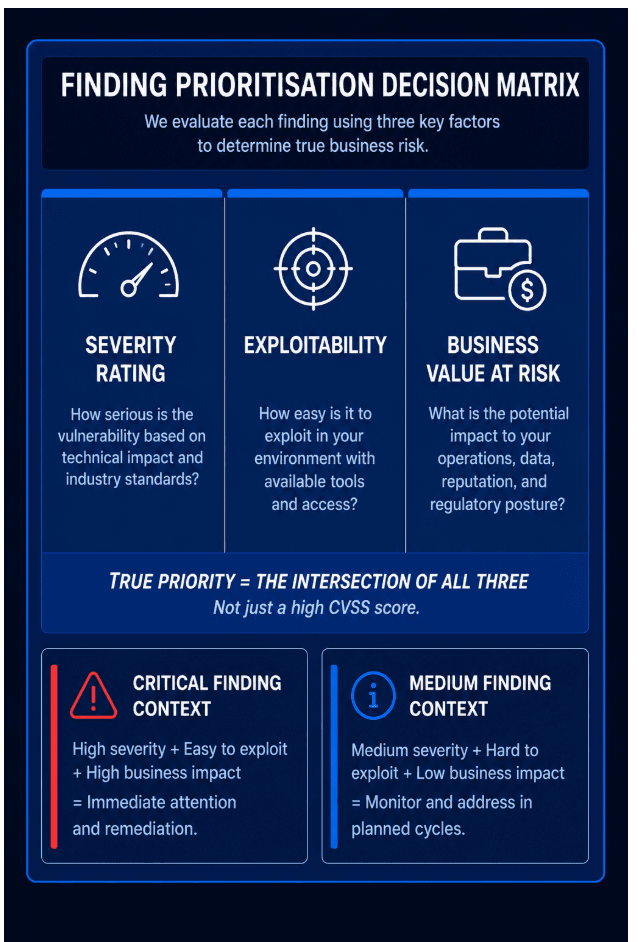
The misunderstanding comes when severity ratings are treated as a simple priority queue. A critical finding does not always require immediate remediation before any medium or low finding is touched. The priority should be based on three factors working together: the severity rating, the exploitability of the finding in the specific environment, and the business value of what sits behind the vulnerability.
A critical vulnerability in an internal development system with no connection to customer data is a different risk decision than a medium vulnerability in the authentication layer of a customer-facing payments application. The severity score is an input to the prioritisation decision, not the decision itself. This is why the context section within each finding matters so much. When Capture The Bug delivers a report through our services page, every finding is written with business context, not just technical description.
Building a Remediation Plan That Actually Gets Executed
The most common point of failure between receiving a penetration testing report and improving security is the remediation planning stage.
Most technical teams, when handed a report, default to one of two approaches. The first is to start working through findings from the top of the severity list downward, treating remediation as a linear checklist. The second is to forward the report to individual engineering teams and allow each team to handle findings within their domain on their own timeline.
Both approaches produce inconsistent results because neither accounts for the dependencies between findings, the capacity constraints of engineering teams, or the difference between findings that require a configuration change and findings that require a meaningful rearchitecture of how a system works.
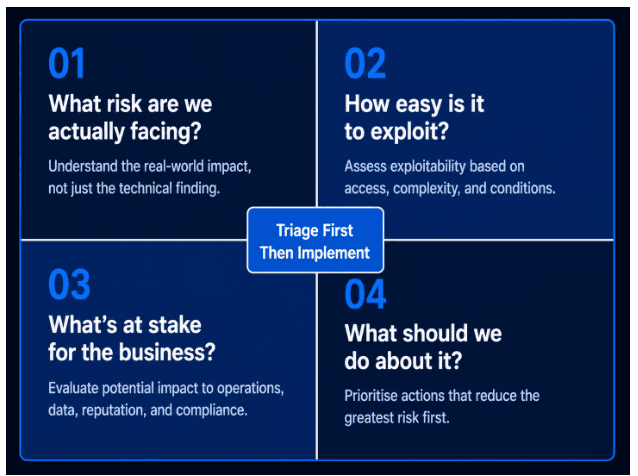
A remediation plan that actually gets executed starts with triage, not implementation. Before any work begins, the security lead and engineering leads should review the findings together and answer four questions for each one: What is the real-world risk if this is not fixed in the next thirty days? What is the level of engineering effort required to fix it correctly? Are there dependencies between this finding and others that affect sequencing? And is there a temporary mitigation that reduces risk while a permanent fix is developed?
The Retest is Not Optional
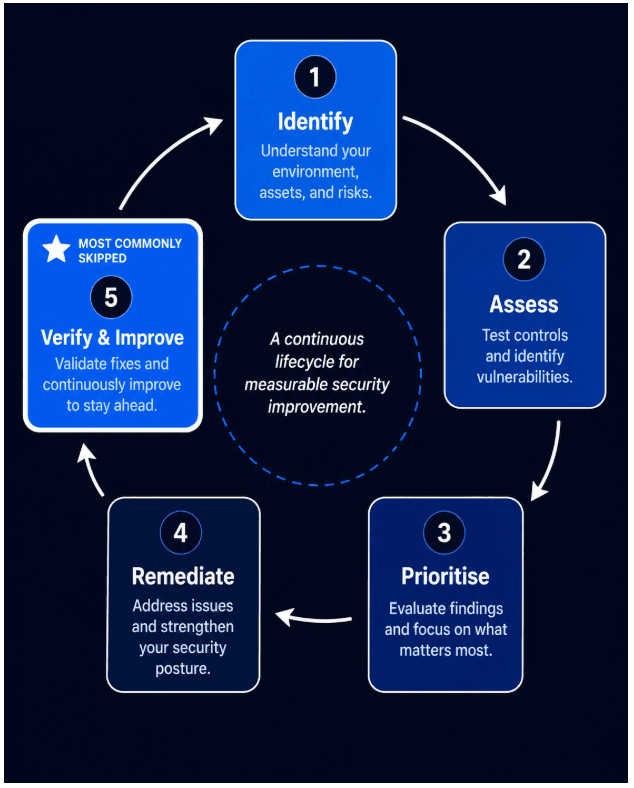
One of the most frequently skipped steps in the penetration testing lifecycle is the retest. Once findings are remediated, many organisations consider the engagement closed. This is a significant oversight.
A retest is the only way to confirm that a remediation has actually resolved the vulnerability rather than simply changing the surface presentation of it. Development teams fix what they believe the finding describes. Penetration testers verify whether the fix actually closes the attack path that was demonstrated. These are not always the same thing.
There are patterns Capture The Bug sees regularly in retest engagements. A team fixes the specific parameter that was flagged in a finding but does not apply the same fix to similar parameters elsewhere in the same application. A team patches a vulnerability at the code level but does not update the underlying library, leaving the same weakness reachable through a different vector. A team addresses a configuration issue in production but not in staging or development environments.
None of these are failures of intent. They are the natural consequence of fixing vulnerabilities without a verification step conducted by the same team that found them. The retest closes that gap. For CTOs and CISOs who want to demonstrate security improvement to a board, a regulator, or an enterprise client, a verified retest report is significantly more credible evidence.
Using the Report for Board and Regulatory Communication
The penetration testing report serves a function beyond the engineering team. It is one of the primary documents that boards, regulators, and enterprise clients use to assess the maturity of a security programme.
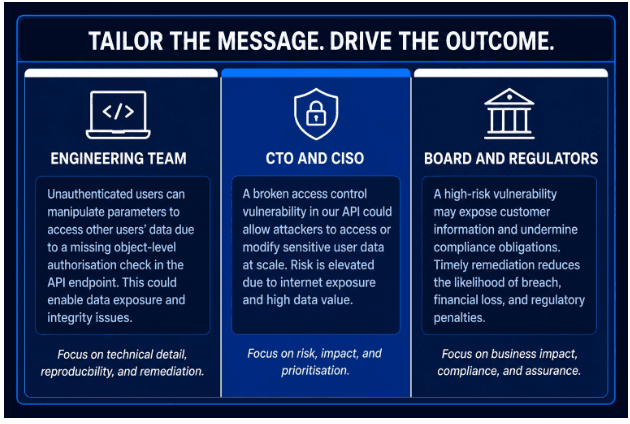
Most penetration testing reports are written for a technical audience. Translating the findings into language that a board member or a regulatory reviewer can understand is the responsibility of the CTO or CISO, and it is a skill worth developing deliberately.
The translation should cover three things: First, what the test found and what it means in terms of business risk, not technical vulnerability categories. Second, what remediation has been completed or is underway, with realistic timelines. Third, what the test did not cover and what the plan is to address those areas in the next testing cycle. For Australian organisations operating under APRA CPS 234, or for New Zealand and US businesses facing their own regulatory frameworks, maintaining a well-documented record of penetration test findings, remediation evidence, and retest outcomes is increasingly the standard expected by auditors.
What a Good Report Looks Like and When to Ask for More
Not all penetration testing reports are created equal, and CTOs and CISOs should know what a high-quality report looks like so they can recognise when a report is falling short of what the engagement should have delivered.
A well-written finding includes a clear description of the vulnerability, documented evidence that it was verified, a description of what an attacker could achieve by exploiting it, a realistic severity assessment in the context of the specific environment, and a remediation recommendation that is specific enough to be actionable.
What a weak finding looks like is a vulnerability name, a generic description copied from a public database, a severity score, and a one-line recommendation to update software or apply a patch. This type of finding tells an engineering team what to look at but not how to think about it or prioritise it. If a report lacks business context or provides generic remediation guidance, it is appropriate to go back to the testing provider. A CREST-certified provider like Capture The Bug is accountable for the quality of every finding, and clarification calls are a normal and expected part of the engagement.
Conclusion: The Report is a Tool, Not a Destination
A penetration testing report represents a significant investment of time, expertise, and organisational attention. The return on that investment is entirely determined by what happens after the report is delivered.
For CTOs and CISOs who treat the report as a tool for driving real security improvement rather than a compliance artefact to be filed, the return is substantial. They understand which findings carry the most real-world risk, they build remediation plans that engineering teams can execute, they verify fixes through retesting, and they use documented evidence to communicate security maturity. The test is the starting point. What follows it is what matters. Learn more about how Capture The Bug structures penetration testing engagements for CTOs and CISOs on our services page.
Plan Your Annual Pentesting Strategy the Right Way
Learn how modern SaaS companies structure pentesting across the year to reduce risk, stay compliant, and avoid last-minute panic before audits.

Frequently Asked Questions
What are the main sections of a penetration testing report?
A well-structured penetration testing report contains three core layers. The executive summary translates findings into business risk language for leadership. The findings section documents each vulnerability with evidence, severity rating, and remediation guidance. The appendices cover testing methodology, scope, and limitations. Understanding all three layers before reading individual findings helps CTOs and CISOs use the report more effectively.
How should penetration test findings be prioritised for remediation?
Severity ratings are an important input but should not be the only factor in prioritisation. The most effective approach considers the severity rating alongside the exploitability of each finding in the specific environment and the business value of what the vulnerability puts at risk. A medium vulnerability in a customer-facing payments system may warrant higher priority than a critical finding in an isolated internal system with no connection to sensitive data.
Is a retest after remediation necessary?
Yes. A retest is the only way to confirm that a remediation has actually closed the vulnerability rather than changing its surface presentation. Development teams frequently address the specific parameter flagged in a finding without applying the same fix across similar areas in the same application. Penetration testers verify whether the fix closes the full attack path. For regulatory evidence and board reporting, a verified retest report is significantly more credible than a list of closed tickets.
How should a CTO or CISO present penetration test findings to a board?
The translation from technical report to board communication should cover three areas: what the test found in terms of business risk rather than vulnerability categories, what remediation is complete or underway with realistic timelines, and what the test did not cover with a plan to address those areas in the next cycle. Boards do not need to understand the technical detail of each finding. They need to understand the risk, the response, and the trajectory.
How can I tell if a penetration testing report is high quality?
A high-quality finding includes a clear vulnerability description, documented evidence that it was verified during the test, a description of what an attacker could achieve by exploiting it, a severity assessment in the context of the specific environment, and remediation guidance specific enough to act on. Reports that contain generic vulnerability descriptions copied from public databases with one-line remediation advice are falling short of what a rigorous engagement should produce.
What does a penetration testing report need to include for APRA CPS 234 compliance?
For APRA CPS 234 purposes, organisations need to be able to demonstrate that security controls have been tested under realistic conditions and that findings have been remediated appropriately. A penetration testing report supports this with documented findings, evidence of testing, and a remediation trail. Maintaining records of the original report, the remediation actions taken, and the retest results creates the evidence chain that APRA auditors expect to review.
What should I do if the penetration testing report findings are unclear?
It is both appropriate and expected to go back to the testing provider for clarification. A CREST-certified provider is accountable for the quality and clarity of every finding. If a finding lacks clear business context, does not explain the attack chain, or provides remediation guidance that is too generic to implement, request a clarification call. The report is a working document, and the relationship with the testing provider should support the full remediation lifecycle, not end at delivery.