Penetration Testing Services in New Zealand: What to Look For in 2026
There is a moment that most New Zealand business leaders remember clearly. It is the moment they realised their security posture was not as solid as they assumed. Sometimes it is an auditor asking questions they cannot answer. Sometimes it is a client contract that requires evidence of recent testing. Sometimes it is reading about a breach at a company similar to theirs and thinking: that could have been us.
What happens next matters. Most go looking for a penetration testing provider. And that is where the confusion starts.
The market for penetration testing services in New Zealand has grown quickly. There are more providers, more pricing models, and more promises than ever before. Knowing how to separate a genuinely capable partner from one that simply produces a good-looking PDF is the skill that separates businesses that improve their security from businesses that just tick a box.
Capture The Bug has worked with organisations across New Zealand, Australia, and the United States. What follows is a plain-language guide to what actually matters when you are evaluating penetration testing services in New Zealand in 2026.
Start With Certification, Not Reputation
The first filter any New Zealand business should apply is certification. Specifically, look for providers that hold or are listed on the CREST marketplace.
CREST is an internationally recognised accreditation body for penetration testing firms and individual testers. It is not a marketing badge. Earning and maintaining CREST certification requires meeting rigorous standards for technical capability, professional conduct, and quality assurance. When a provider is CREST-listed, it means they have been independently assessed, not just self-declared as experts.
Capture The Bug is listed on the CREST marketplace. That listing exists because the platform and its testing community meet those independently verified standards. For any New Zealand business purchasing penetration testing services, CREST certification is the baseline check, not the final one, but the first one.
Beyond CREST, ask whether the provider's individual testers hold recognised qualifications. Certifications such as OSCP, CREST CRT, or CEH indicate that the people doing the actual testing have been assessed on their technical skills, not just the company they work for.

Understand What Kind of Testing You Actually Need
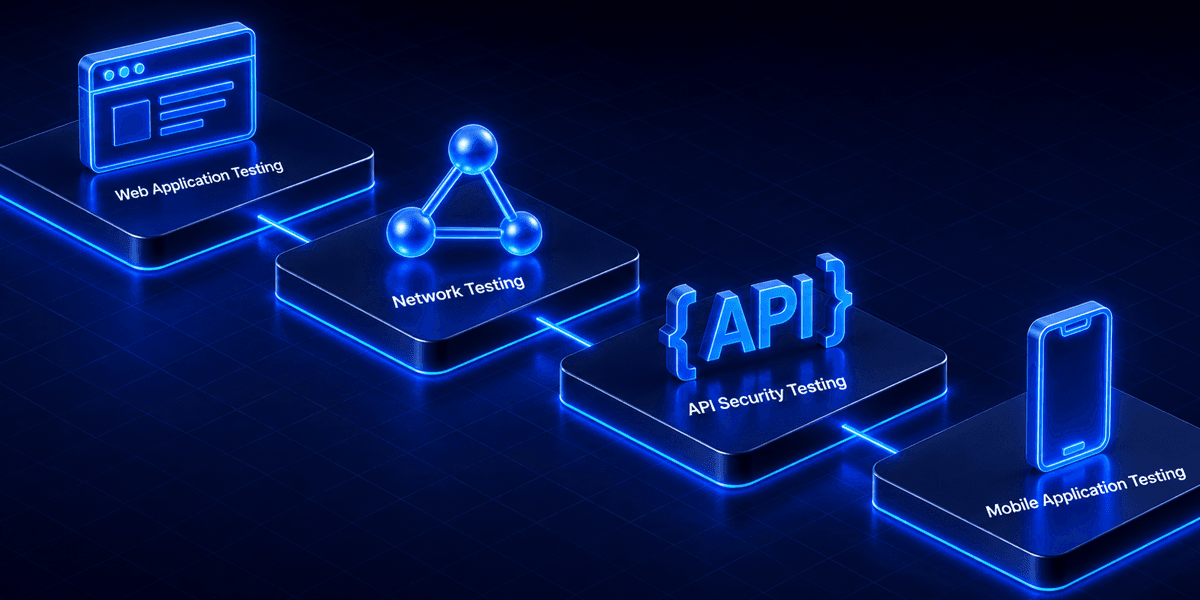
One of the most common mistakes New Zealand businesses make when purchasing penetration testing services is not being clear about what they need tested. Penetration testing is not a single product. It covers a range of assessment types, each designed for different parts of your environment.
Web application testing focuses on the security of browser-based software, including authentication, session handling, input validation, and access control. This is the most common entry point for real-world attackers targeting New Zealand businesses.
Network penetration testing assesses the security of your internal and external network infrastructure, looking for misconfigured systems, weak access controls, and paths an attacker could use to move through your environment once inside.
API security testing has become increasingly important as businesses connect more services together through application programming interfaces. An API that is not properly tested is frequently a path of least resistance for attackers.
Mobile application testing covers the security of iOS and Android applications, including data storage, communication security, and authentication handling.
At Capture The Bug's penetration testing services, the full range of assessment types is outlined for businesses to review. Before engaging any provider, New Zealand businesses should map their own digital environment and be specific about what needs to be tested, rather than accepting a generic package that may not match their actual risk profile.
Look at How Findings Are Communicated
A penetration test is only as useful as the report that comes out of it. This is an area where there is a significant quality gap between providers in the New Zealand market.
A low-quality penetration test report lists vulnerabilities by their technical names, assigns them a severity score, and stops there. The business reads it, does not fully understand what it means in practice, and hands it to a developer who patches what they can without any strategic context.
A high-quality report does something different. It explains each finding in plain language. It describes what an attacker could actually do with the vulnerability, not just that the vulnerability exists. It prioritises findings in the context of your specific business rather than applying a generic severity matrix. And it provides remediation guidance that a development team can act on without needing to decode academic security terminology.
Ask any provider you are evaluating to share an example report with sensitive details removed. If the report reads like a technical audit written for other security professionals, it may not serve your team well. The best penetration testing reports are written to be read and acted on by the people who will actually do the fixing.
Frequency Matters More Than Most Providers Will Tell You
This is the conversation that most penetration testing providers in New Zealand do not initiate, because it challenges the annual engagement model that benefits them commercially.
A single annual penetration test gives you a point-in-time view of your security posture. The moment the test ends, your environment continues to change. New features get built. New services go live. Configurations get updated. The attack surface you tested twelve months ago is not the attack surface you are running today.
Businesses that are serious about security in 2026 are moving toward more frequent testing cycles. This does not mean running a full-scope engagement every month. It means building a testing programme that keeps pace with your rate of change. Critical applications or new features get tested when they launch, not a year later when the next annual test rolls around.
Capture The Bug's penetration testing services are structured to support this kind of ongoing engagement. The platform connects businesses with a vetted community of security professionals who can work continuously rather than in a single fixed window, which means findings surface faster and remediation happens while the issue is still fresh.
Assess the Triage and Communication Process
Speed of communication during an active engagement is a detail that rarely gets discussed before a contract is signed and becomes critically important the moment a high-severity finding is discovered.
Ask potential providers: if your tester finds a critical vulnerability during the engagement, how quickly will you be notified? Some firms batch all findings into the final report. Others provide real-time notification for critical issues so you can begin remediation immediately rather than waiting for the engagement to conclude.
Capture The Bug operates with a fast triage model. Critical findings are escalated as they are discovered, not held until report delivery. For businesses that are running live customer-facing services, this distinction matters.
Also ask how the provider handles disputes or questions about findings. If your development team believes a reported vulnerability is a false positive or has already been remediated, is there a clear process for reviewing and resolving that? A good provider has a structured feedback loop, not just a one-way report delivery.
The New Zealand Regulatory Context in 2026
New Zealand businesses operating in regulated industries or handling personal data have additional reasons to take penetration testing seriously in 2026.
The Privacy Act 2020 places clear obligations on organisations to protect personal information. Demonstrating that your systems have been independently tested and that known vulnerabilities have been remediated is increasingly part of what regulators and privacy commissioners expect when incidents are investigated.
For businesses that hold health data, financial records, or are suppliers to government agencies, the bar is higher still. Penetration testing reports that are dated, incomplete, or clearly point-in-time snapshots from many months ago do not serve well as evidence of ongoing due diligence.
Working with a CREST-certified provider and maintaining a testing programme that produces regular, current evidence of your security posture is the most defensible position a New Zealand business can be in when a regulatory question arises.

What Separates Good Providers From the Rest
After working with hundreds of organisations across New Zealand, Australia, and the United States, Capture The Bug has observed a consistent pattern in what separates security testing partnerships that produce real improvement from those that produce documentation.
The providers that create real value are specific. They ask detailed questions about your environment before scoping. They push back if a testing window is too short to do the work properly. They write reports that your developers can use. They follow up after the engagement to confirm remediation.
The providers that produce documentation are vague. They apply standard templates regardless of your environment. They deliver reports that satisfy an auditor question but do not drive any real change in your security posture.
For New Zealand businesses making this decision in 2026, the distinction matters more than it ever has. The threat environment is not slowing down. The regulatory expectations are not softening. And the cost of a breach, measured in customer trust, operational disruption, and regulatory consequence, continues to rise.
Choosing the right penetration testing partner is not a procurement exercise. It is a decision about how seriously your organisation takes the security of the people who trust you with their data.
Get Audit-Ready Without the Guesswork
Download a complete SOC 2 checklist designed for fast-growing SaaS companies. Know exactly what auditors expect and fix gaps before they cost you deals.
Download Your SOC 2 Checklist Now
Frequently Asked Questions
What is penetration testing and why do New Zealand businesses need it?
Penetration testing is a structured security assessment where qualified professionals attempt to find and exploit vulnerabilities in your systems before real attackers can. New Zealand businesses need it to identify weaknesses in their web applications, networks, and infrastructure, to meet compliance requirements, and to demonstrate due diligence under the Privacy Act 2020 and other regulatory frameworks.
How often should a New Zealand business conduct a penetration test?
The right frequency depends on how often your environment changes and how sensitive the data you handle is. Businesses that ship software regularly or operate in regulated industries should test more frequently than once a year. A minimum recommendation for most organisations is to test after every major release cycle and at least twice annually for critical systems.
What does CREST certification mean for a penetration testing provider?
CREST is an internationally recognised accreditation body that independently assesses penetration testing firms against rigorous standards for technical capability and professional conduct. A CREST-listed provider has been externally verified, not simply self-declared as capable. It is the baseline quality signal to look for when selecting a provider in New Zealand or Australia.
How is Capture The Bug different from traditional penetration testing firms?
Capture The Bug operates as a PTaaS platform, connecting organisations with a vetted and certified community of security professionals rather than relying on a single in-house team. This model enables faster triage, real-time finding notification, and ongoing testing support rather than a single annual engagement. The platform is CREST-listed and has a track record of over 2,500 bugs identified across more than 500 organisations.
What should a penetration testing report include?
A quality penetration testing report should include a plain-language description of each finding, a clear explanation of what an attacker could do with the vulnerability, a prioritised list of issues specific to your environment, and actionable remediation guidance your team can act on. Avoid providers whose reports are written purely for technical audiences without business context.