
Why One Annual Pentest Is No Longer Enough — And What to Do Instead
Most companies still operate on the assumption that a single penetration test each year keeps them protected. The test gets done, a PDF report lands in someone's inbox, the findings get logged, and the security team moves on. Everyone feels like the box has been ticked.
But that assumption is quietly becoming one of the most expensive mistakes a business can make.
The threat landscape has changed. The way software gets built has changed. The way attackers operate has changed. What has not changed, for far too many organisations, is the security testing cadence. And that gap between how fast things move and how infrequently they are tested is exactly where breaches happen.
Capture The Bug works with companies across Australia, New Zealand, and the United States. What the team sees again and again is that the businesses that suffer the most significant incidents are not the ones with zero security practices. They are the ones who had a pentest done months ago and assumed the results were still accurate.
They were not.
The World Your Annual Pentest Does Not See
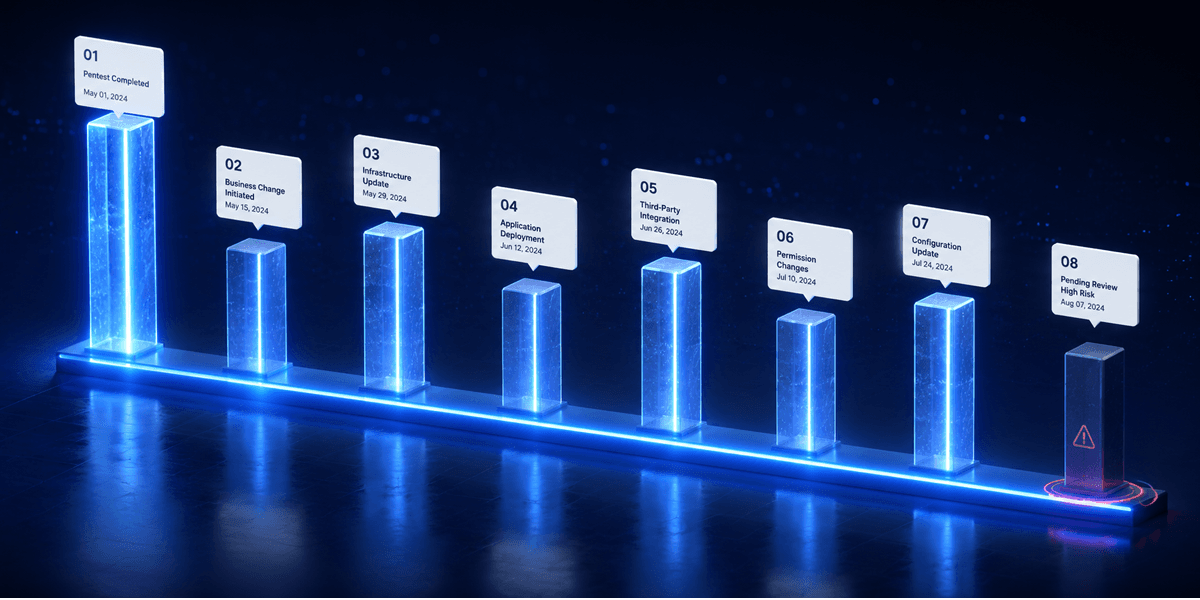
A traditional annual penetration test is a point-in-time exercise. It captures the state of your environment on the days the testers were engaged. The moment that test ends, your environment keeps changing.
New features ship. New third-party integrations go live. Engineers push code updates. Cloud configurations get adjusted. APIs get extended. And every single one of those changes introduces the possibility of a new vulnerability, a new misconfiguration, or a new attack path that did not exist when the test was run.
By the time most companies read through their pentest report and begin working on remediation, weeks have passed. By the time that same company books their next annual test, an entire year has gone by. In that year, the average organisation has made hundreds of changes to its software and infrastructure.
How many of those changes were ever tested? Almost none.
This is not a hypothetical risk. According to research from Verizon and IBM's annual security reports, the majority of breaches exploit vulnerabilities that were known or discoverable, not zero-day attacks from nation-state actors. The window between a vulnerability existing and it being exploited is shrinking. Attackers move fast. Annual testing does not.
Why Compliance Is Not the Same as Security
Many organisations run their annual pentest to satisfy a compliance requirement. SOC 2. ISO 27001. PCI-DSS. The audit asks for evidence of a penetration test, the company produces one, and the checkbox gets filled.
This is understandable. Compliance matters. But compliance-driven testing and genuine security are not the same thing.
A compliance-focused pentest is designed to meet a minimum standard at a moment in time. It is not designed to continuously pressure-test an evolving product. The result is that companies end up with documentation that satisfies auditors while leaving real risk unaddressed in the product itself.
Capture The Bug's CREST-certified penetration testing services are built to serve both goals at once. The compliance documentation gets produced. But the testing itself is structured to go deeper, more frequently, and with more context than a once-a-year engagement allows. Businesses get reports that hold up under audit and findings that actually reflect the current state of their environment.
What Changes When Testing Becomes Continuous
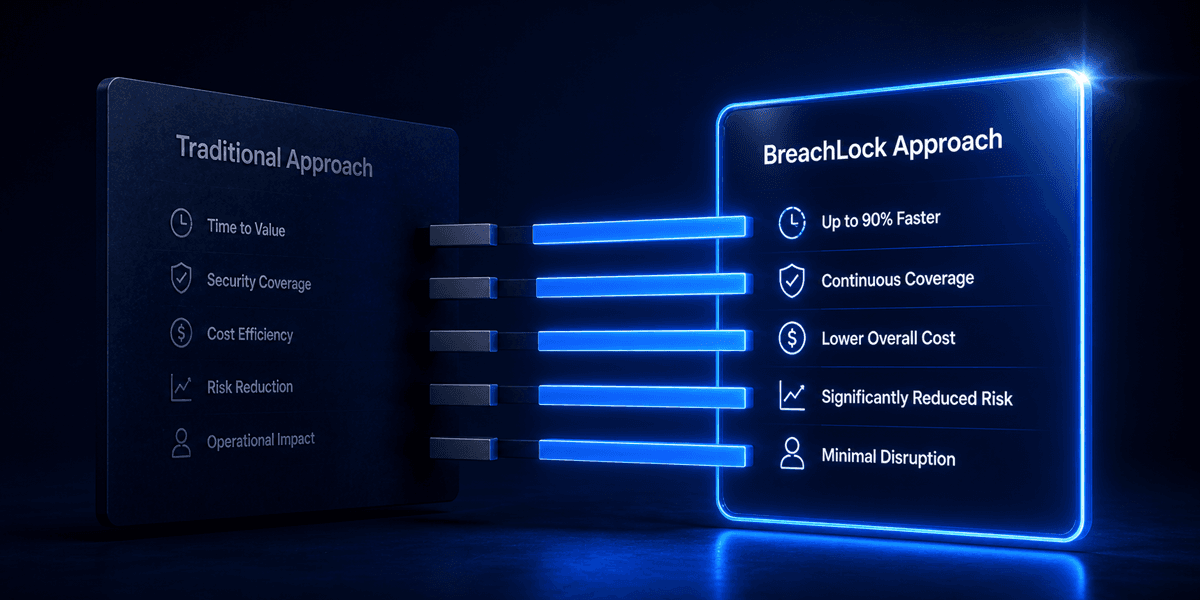
The shift from annual to continuous penetration testing is not just a frequency change. It is a fundamentally different relationship between your security posture and your development cycle.
When testing happens continuously, vulnerabilities get caught before they become incidents. A new feature gets built, and it gets tested. A cloud storage configuration changes, and it gets reviewed. An API endpoint gets added, and it gets assessed. The lag between "this vulnerability exists" and "we know about this vulnerability" collapses from months to days or even hours.
This matters for several reasons.
First, the cost of remediation drops significantly when vulnerabilities are caught early. Fixing a security flaw in a feature that shipped last week costs a fraction of what it costs to fix a flaw that has been in production for eight months and may already have been exploited.
Second, the security team stops operating in reactive mode. Instead of scrambling to respond to a report full of findings that already went live months ago, the team is working with current, actionable intelligence.
Third, and perhaps most importantly, the culture around security starts to change. When engineers know that what they build will be tested continuously, security becomes part of the process rather than a final audit layer. Teams make better decisions earlier.
Capture The Bug's penetration testing services are designed to support exactly this kind of continuous engagement, giving organisations access to a vetted community of security professionals who test actively and report in real time.

The Real Cost of the Annual Model
It is worth being direct about what annual-only testing actually costs, not in budget terms, but in exposure terms.
If your organisation ships code on a two-week cycle, you are making 26 rounds of changes per year. An annual pentest covers one of those cycles in depth, and none of the others. You are essentially testing 4 percent of your change activity and assuming the other 96 percent is clean.
For a startup moving fast, this is a serious risk. For a fintech or healthcare company handling sensitive customer data, it is a liability exposure that no compliance report can paper over.
The companies that have moved to continuous or at minimum quarterly testing cycles consistently report better outcomes: faster detection times, lower remediation costs, fewer surprises during audits, and a stronger foundation for conversations with enterprise clients and investors who are increasingly asking detailed questions about security practices.
What to Do Instead: A Practical Path Forward
Moving away from annual-only testing does not have to mean an overnight overhaul of your entire security programme.
The most effective approach Capture The Bug has seen across its client base in Australia, New Zealand, and the United States is a tiered model. Start with a comprehensive baseline assessment that maps your entire attack surface. Then layer in continuous testing for the parts of your environment that change most frequently, typically web applications, APIs, and cloud infrastructure. Reserve deeper, structured assessments for major product releases or infrastructure changes.
This approach gives organisations the coverage of continuous testing without the operational chaos of trying to run full-scope pentests every few weeks. It also makes the compliance story much cleaner, because there is always current, dated evidence of active security testing across different parts of the environment.
For businesses that have never moved beyond annual testing, the first step is simply to understand what has changed since the last test. Most organisations are surprised by how much their attack surface has expanded in 12 months. A good starting point is a focused assessment of any features or infrastructure added since the last pentest, followed by a conversation about what a sustainable continuous programme looks like for that specific environment.
Capture The Bug's penetration testing services are built to support organisations at every stage of this shift, whether they are running their first structured engagement or moving from annual to continuous testing across a complex multi-cloud environment.

The Standard Is Shifting
Across the industries Capture The Bug serves, including fintech, healthcare SaaS, and cloud-native platforms in Australia, New Zealand, and the United States, the expectation around security testing frequency is changing.
Enterprise procurement teams are asking more detailed questions. Insurers are tightening their requirements. Regulators in Australia and New Zealand are paying closer attention to whether companies can demonstrate ongoing security diligence, not just a single annual report.
The organisations that get ahead of this shift are not doing so because they are bigger or better resourced. They are doing so because they made a decision to treat security testing as a continuous operational practice rather than an annual administrative task.
With more than 500 companies already working through Capture The Bug's platform, and a community that has identified over 2,500 bugs resulting in more than $1.2 million in rewards paid to researchers, the case for continuous testing is not theoretical. It is documented in finding after finding that would never have surfaced under an annual-only model.
One test a year was never really enough. In 2026, that reality is no longer easy to ignore.
Get Audit-Ready Without the Guesswork
Download a complete SOC 2 checklist designed for fast-growing SaaS companies. Know exactly what auditors expect and fix gaps before they cost you deals.
Download Your SOC 2 Checklist Now
Frequently Asked Questions
How often should a company conduct penetration testing?
The right frequency depends on how often your environment changes. Companies that ship software regularly or operate in regulated industries benefit from quarterly or continuous testing rather than waiting for an annual cycle. At minimum, a penetration test should be run after every major product release or infrastructure change.
What is the difference between annual pentesting and continuous penetration testing?
An annual penetration test is a single point-in-time assessment. Continuous penetration testing involves ongoing, regular security assessments that keep pace with changes to your environment. Continuous testing catches vulnerabilities as they are introduced rather than months after they have been in production.
Does continuous penetration testing replace the need for compliance-focused assessments?
No. Compliance-focused assessments still serve an important role in meeting audit requirements. Continuous penetration testing complements that process by providing real-time security insight that goes beyond what compliance documentation alone can offer. Many organisations use both together.
How does Capture The Bug approach penetration testing differently from traditional firms?
Capture The Bug operates as a PTaaS platform, connecting organisations with a vetted community of security professionals through a structured, transparent engagement model. Testing is faster, findings are reported in real time, and the platform is built to support ongoing engagement rather than one-time assessments. The company is CREST-certified and listed on the CREST marketplace.
What should a business do first if it has only been running annual pentests?
The most practical first step is to identify everything that has changed since the last test, including new features, third-party integrations, API changes, and infrastructure updates. From there, a focused assessment of those new areas gives an immediate picture of current exposure and forms the foundation for a continuous testing programme.